
Exxon Mobil ($XOM): The Ultimate Pandemic Stress Test
2026-03-17
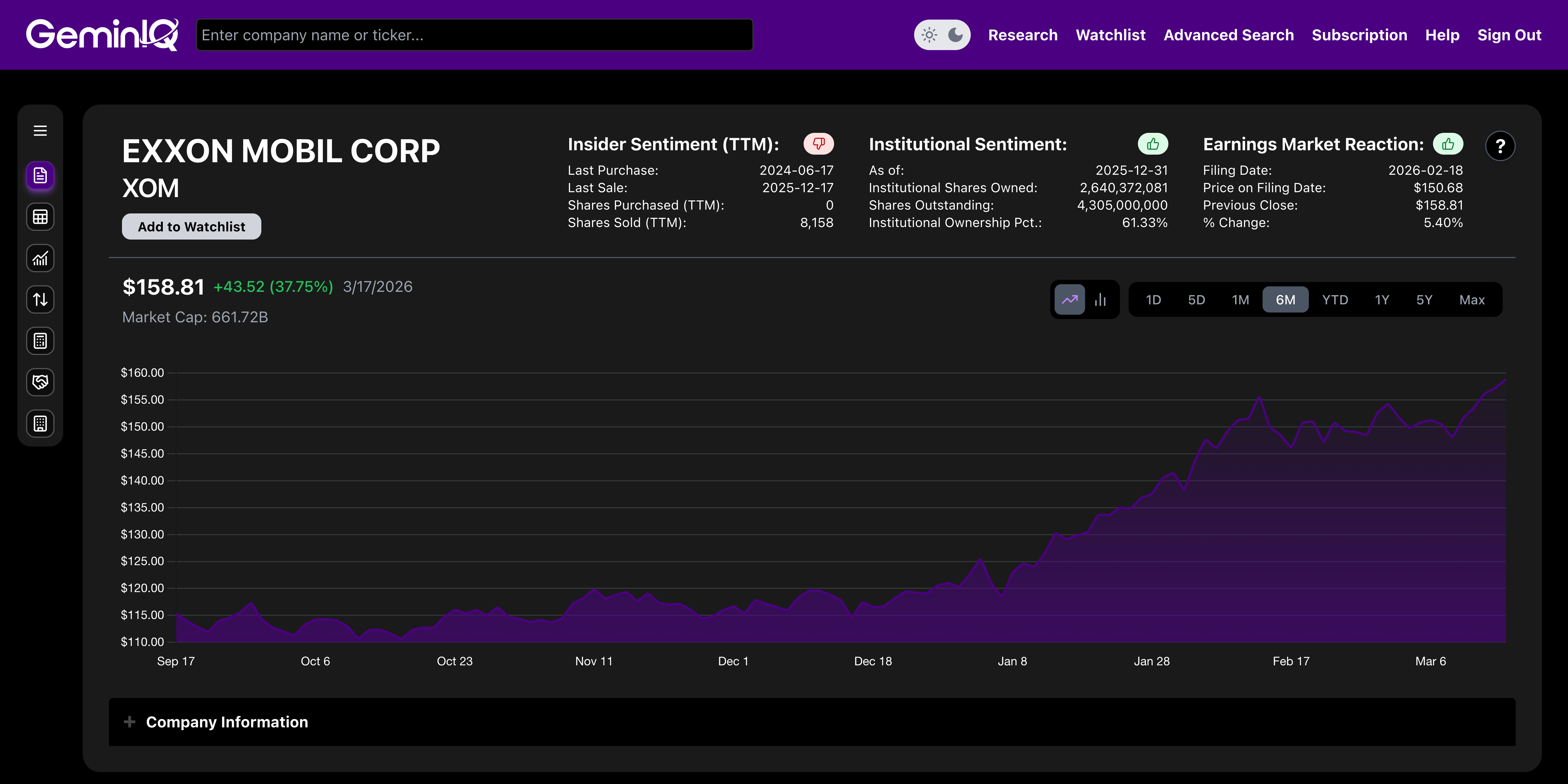
Exxon Mobil ($XOM) just dropped its 2025 Annual Report (10-K filed Feb 18, 2026). The retail crowd and media treat legacy energy companies purely as daily trades on the price of oil. The mainstream narrative assumes they are highly cyclical and dangerous. But I used GeminIQ to audit the raw 10-K, and the real story is that Exxon has completely engineered the cyclical risk out of its business model. Here is the fundamental truth behind the ticker.
From Cash Burn to Cash Cannon
To understand Exxon's true moat, you have to look at the ultimate stress test: the 2020 pandemic oil crash.
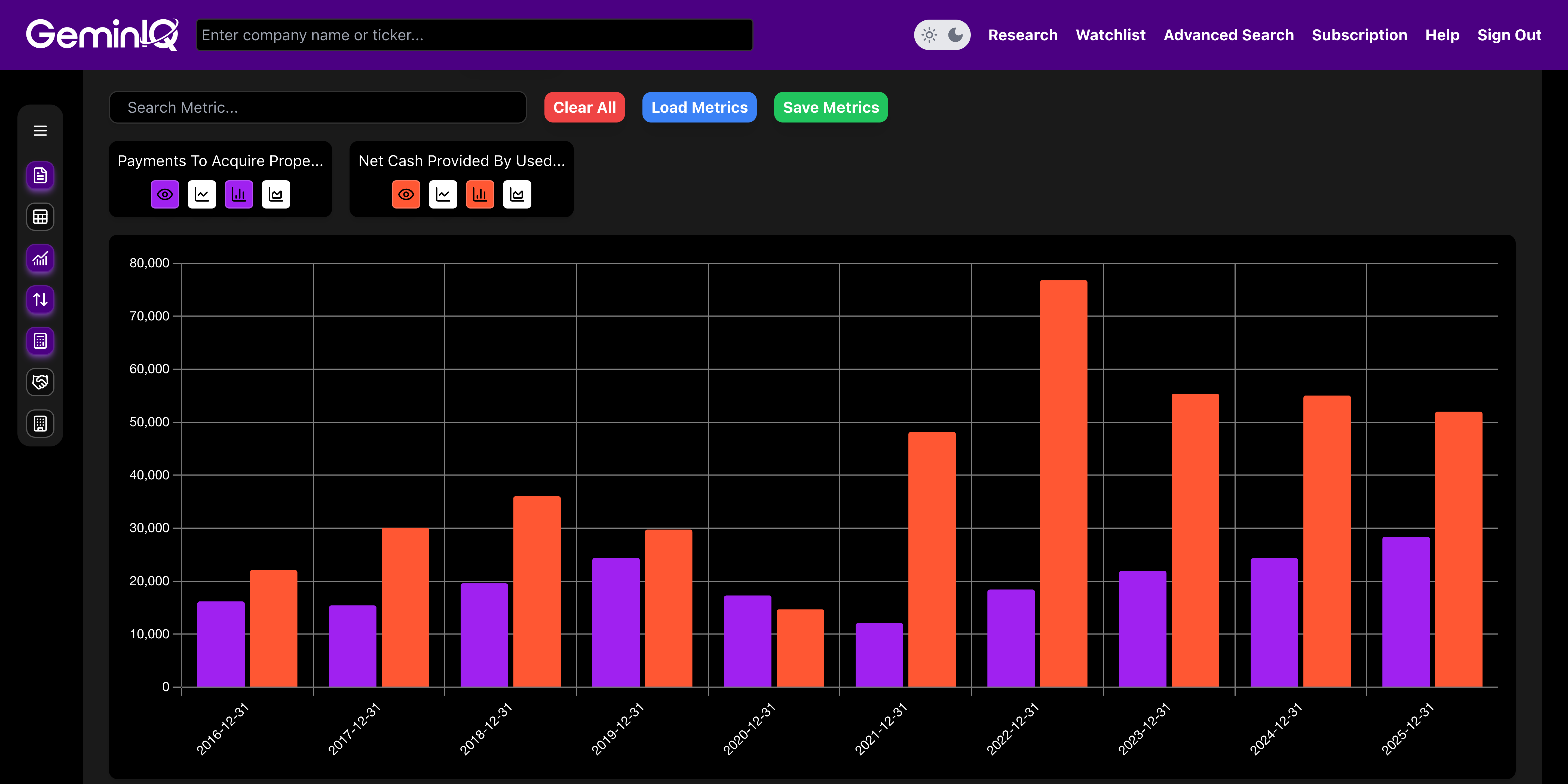
The Data: In 2020, as the world locked down, Exxon's Operating Cash Flow plummeted to just $14.6 Billion, while their Capital Expenditures (Capex) remained a heavy $17.2 Billion. They actually burned $2.6 Billion in Free Cash Flow. Fast forward to 2025: Operating Cash Flow has exploded to $51.9 Billion, while Capex remains disciplined at $28.3 Billion.
The GeminIQ Edge: Standard screeners focus on GAAP Net Income, which swings wildly with commodity prices. By directly auditing the Cash Flow Statement via GeminIQ, you can visualize the true spread. Exxon is now generating a staggering $23.6 Billion in raw Free Cash Flow.
The Dividend Fortress
Why does that massive Free Cash Flow buffer matter? Because it fundamentally protects the dividend, proving it is a fortress that can survive any crisis.
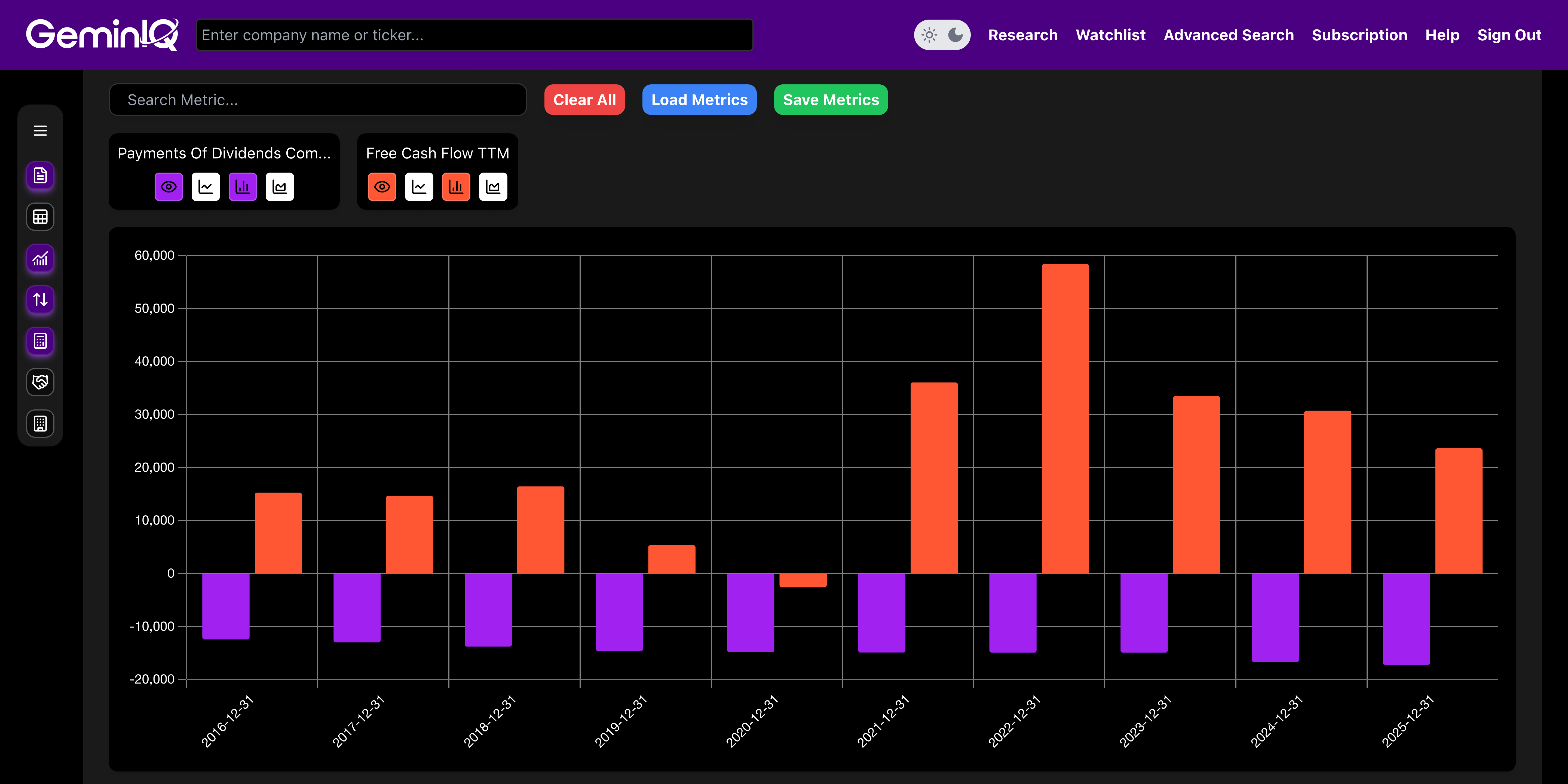
The Data: During the 2020 stress test, Exxon paid out $14.8 Billion in dividends while their Free Cash Flow was negative, forcing them to rely heavily on debt. Many thought a dividend cut was inevitable. Today in 2025, they paid out a massive $17.2 Billion in dividends—and because their cash engine has recovered so violently, it was effortlessly covered with over $6 Billion in Free Cash Flow to spare.
The GeminIQ Edge: By pulling raw Dividends Paid against Free Cash Flow, we can prove that Exxon has evolved from a vulnerable wildcatter into a financial utility that prints cash and funds its payouts purely from operations.
The Macro Illusion (Decoding the Heat Map)
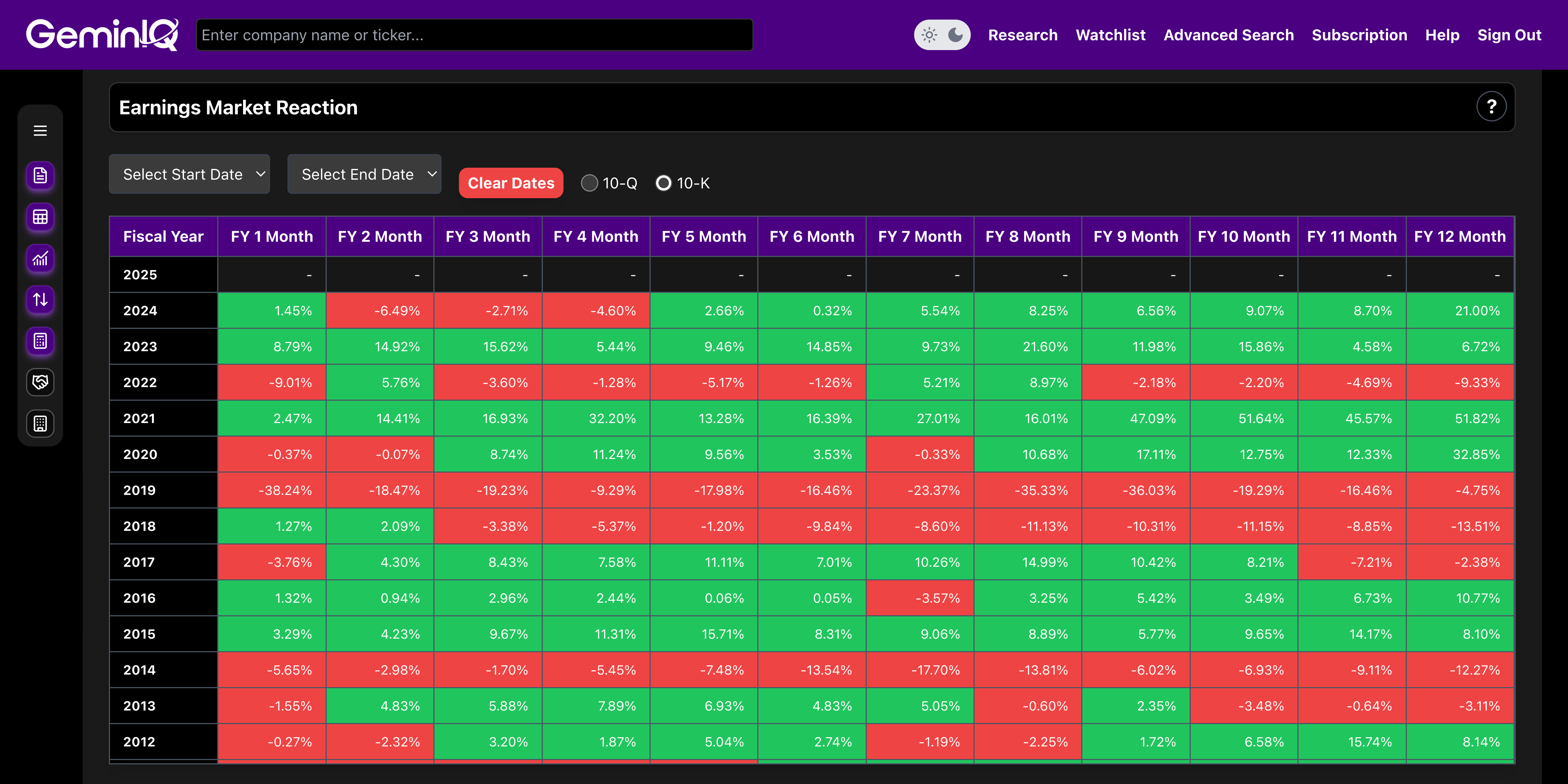
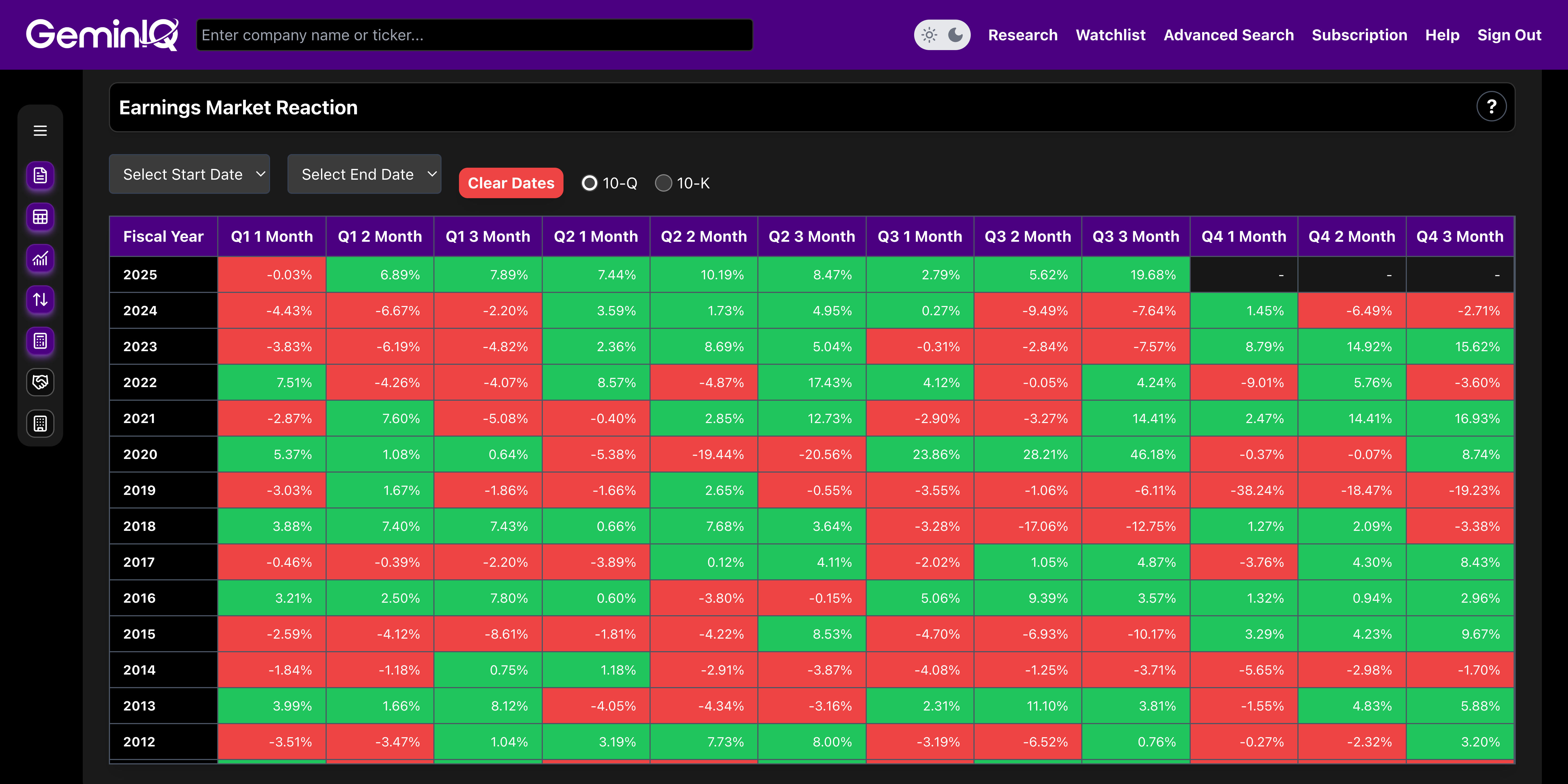
If you look at the Earnings Market Reaction Heat Map for $XOM's historical Q4/10-K filings, it shows an average Month 1 drop of -2.7%. A standard analyst might tell you this is a "post-earnings slump." But if you correlate the filing dates with global macro events, you realize that narrative is completely false. Exxon doesn't trade on its 10-K; it trades on global oil shocks.
The Context: Look at the specific years driving that negative M_1 average:
- February 2015 (-5.6% M_1): Driven by OPEC refusing to cut production, crashing the oil market.
- February 2020 (-38.2% M_1): Driven by the outbreak of the COVID-19 pandemic destroying global oil demand, not the earnings report.
- February 2022 & 2024 (+14% to +15% M_2): Driven by the Russia-Ukraine conflict and Red Sea shipping attacks adding massive geopolitical risk premiums to crude.
Strategy suggests that you cannot trade an oil major's earnings blindly. The historical "average" is skewed by black-swan crashes. Because their business is now an absolute fortress, the true strategy is to ignore the earnings noise and use global macro panics as generational buying opportunities for an insulated dividend.
Research faster. Invest smarter.
Most financial websites rely on third-party aggregators that simplify or process data before you ever see it. We built GeminIQ because we believe you deserve a better fundamental analysis tool—one that goes beyond basic price charts and processed numbers. We extract our data directly from SEC 10-K and 10-Q filings to ensure that when you look at a balance sheet or a cash flow statement, you are seeing the numbers exactly how the company reported them. Start researching now at GeminIQ.com.
Disclaimer: The content in this blog is for educational and entertainment purposes only and does not constitute financial, legal, or tax advice. Investing involves risk, including the loss of principal. The views expressed are my own and not intended as financial advice or a guarantee of future performance.