
Alphabet Q1 2026 10-Q: The Debt-Funded AI Buildout

By Chad Hartman
Published · Last updated
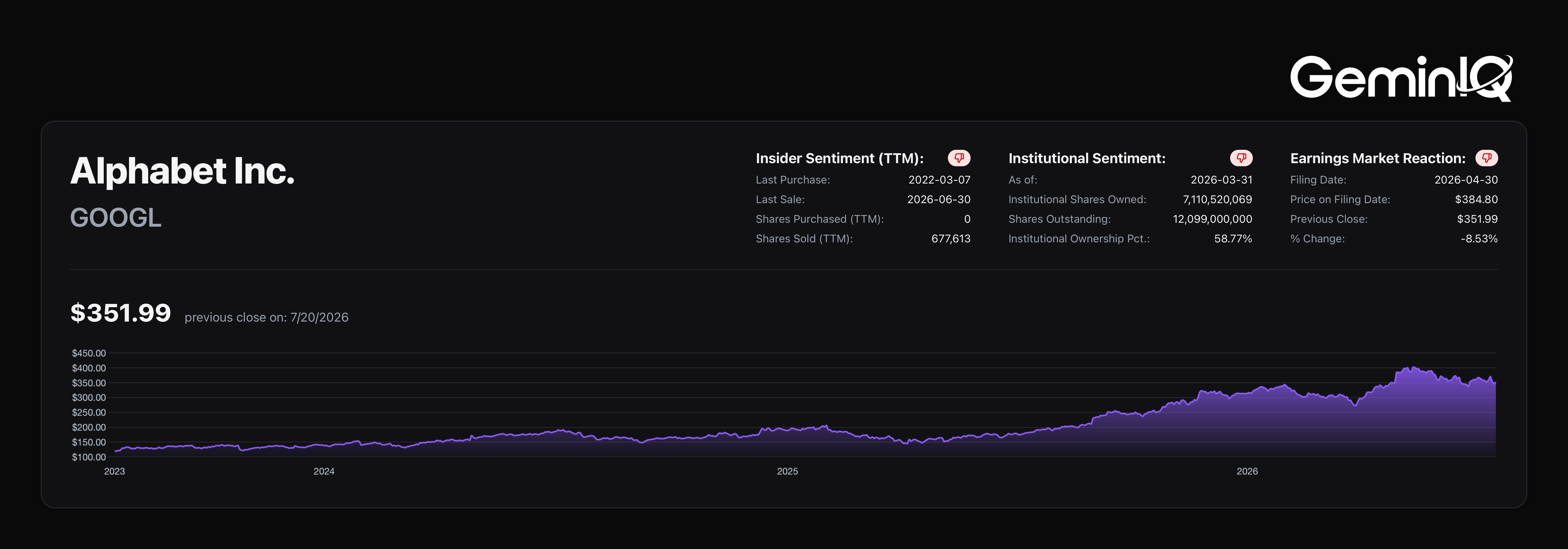
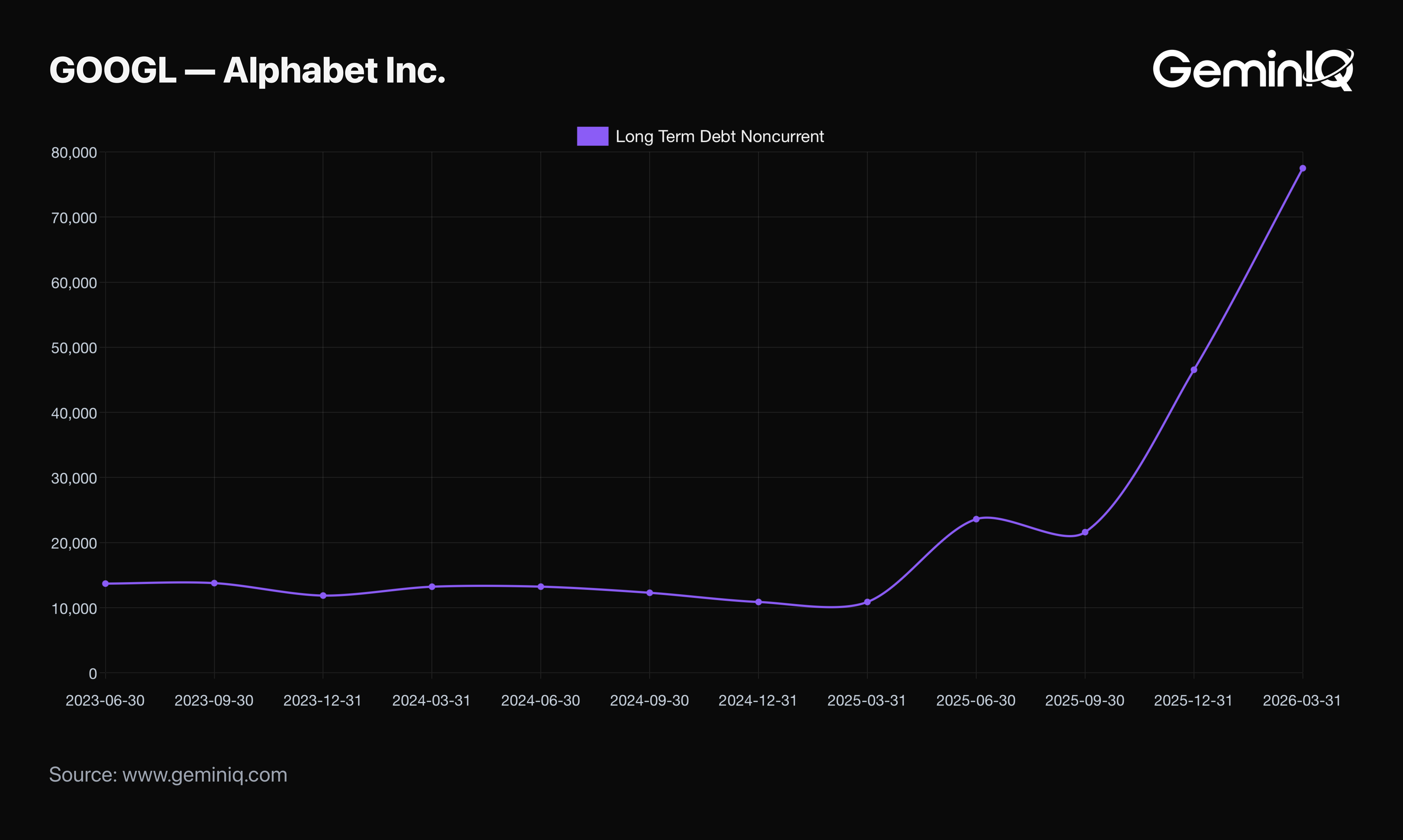
Alphabet ($GOOGL) just filed its Q1 FY2026 10-Q (filed April 30, 2026). The balance sheet has changed more in the past twelve months than in the prior decade combined: Long-Term Debt has grown from roughly $10.9 Billion to $77.5 Billion, a roughly sevenfold increase, funding a capital expenditure program guided at $175-185 Billion for 2026 alone. This isn't a company quietly compounding retained earnings anymore. It's a company that has gone to the bond market repeatedly, including a rare 100-year note, to fund the largest infrastructure buildout in its history.
| Field | Value |
|---|---|
| Ticker | $GOOGL |
| Filing | Q1 FY2026 10-Q |
| Filed | April 30, 2026 |
| Period End | March 31, 2026 |
| Long-Term Debt | $77.5 Billion |
| TTM CapEx | $109.9 Billion |
The Debt Load Has Transformed
This is the single largest year-over-year change on the balance sheet, and it's worth being precise about the scale.
The Data: Alphabet's Long-Term Debt stood at approximately $10.9 Billion in Q1 FY2025. By Q4 FY2025 it had grown to $46.5 Billion, and by this filing it reached $77.5 Billion — a roughly sevenfold increase in a single year. The jump between the two most recent quarters alone reflects a series of bond offerings completed in February 2026, including a landmark note maturing in 2126, a full century out, the first bond of that maturity issued by a technology company since 1997.
The GeminIQ Edge: Pulling Financial Statements balance sheet data quarter by quarter, rather than trusting a single annual snapshot, makes a change of this magnitude impossible to miss. A debt load transforming this dramatically in twelve months is exactly the kind of structural shift that a year-over-year 10-K comparison alone can smooth over.
The CapEx Program Behind It
The debt didn't appear on its own. It's directly tied to a capital expenditure program of a scale this company hasn't previously attempted.
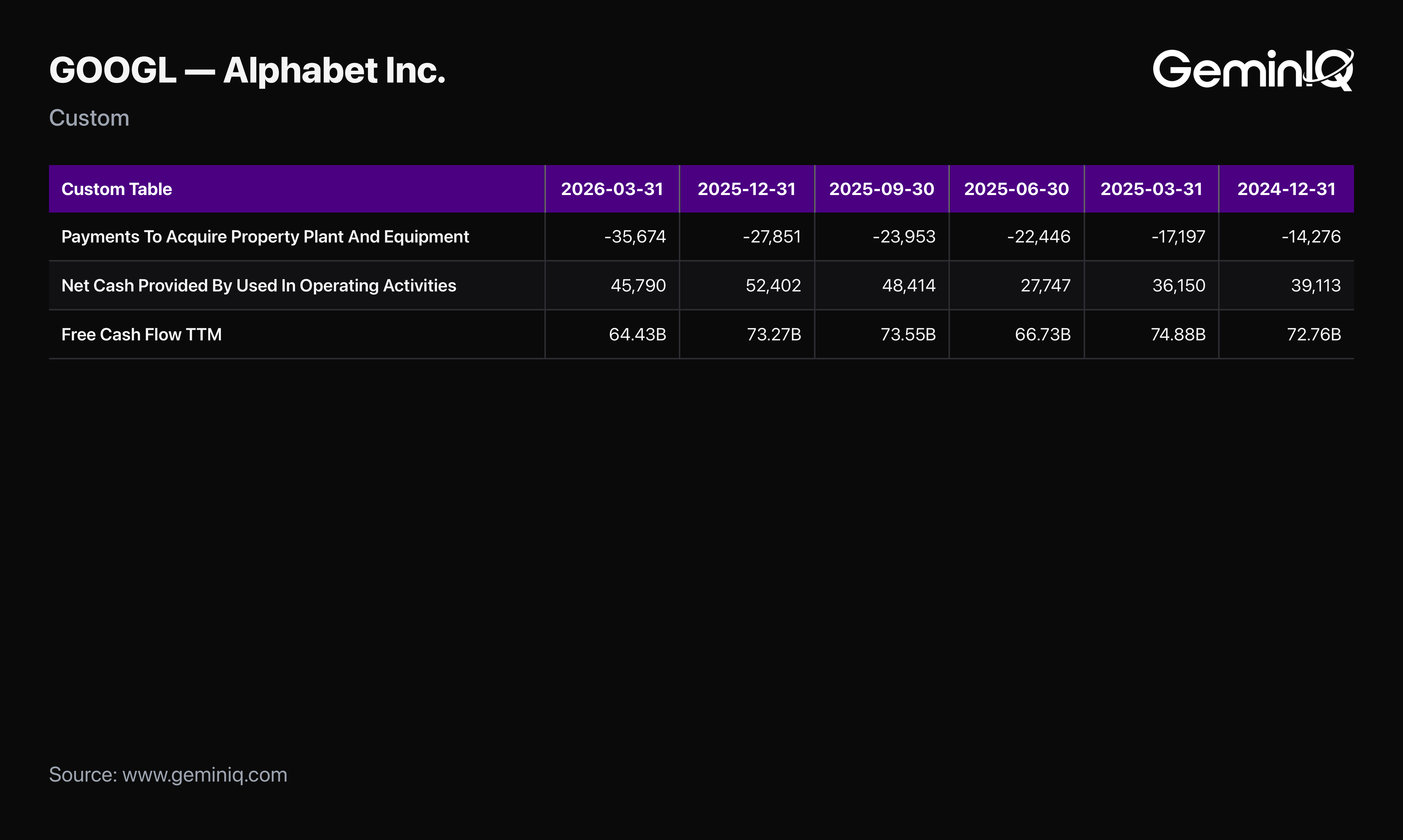
The Data: TTM CapEx is $109.9 Billion, against TTM Operating Cash Flow of $174.4 Billion and TTM Free Cash Flow of $64.4 Billion. Free cash flow remains solidly positive, but it has compressed materially as capital spending has scaled toward the company's guided $175-185 Billion for full-year 2026.
The GeminIQ Edge: Pulling Financial Statements cash flow data alongside the debt trend above shows the two moving together: rather than fund this buildout entirely from operating cash flow, which would have compressed free cash flow further, Alphabet has chosen to finance a meaningful portion of it externally.
The Core Business Is Still Very Profitable
None of the above changes the fact that Alphabet's underlying business generating the cash to service this debt remains highly profitable.
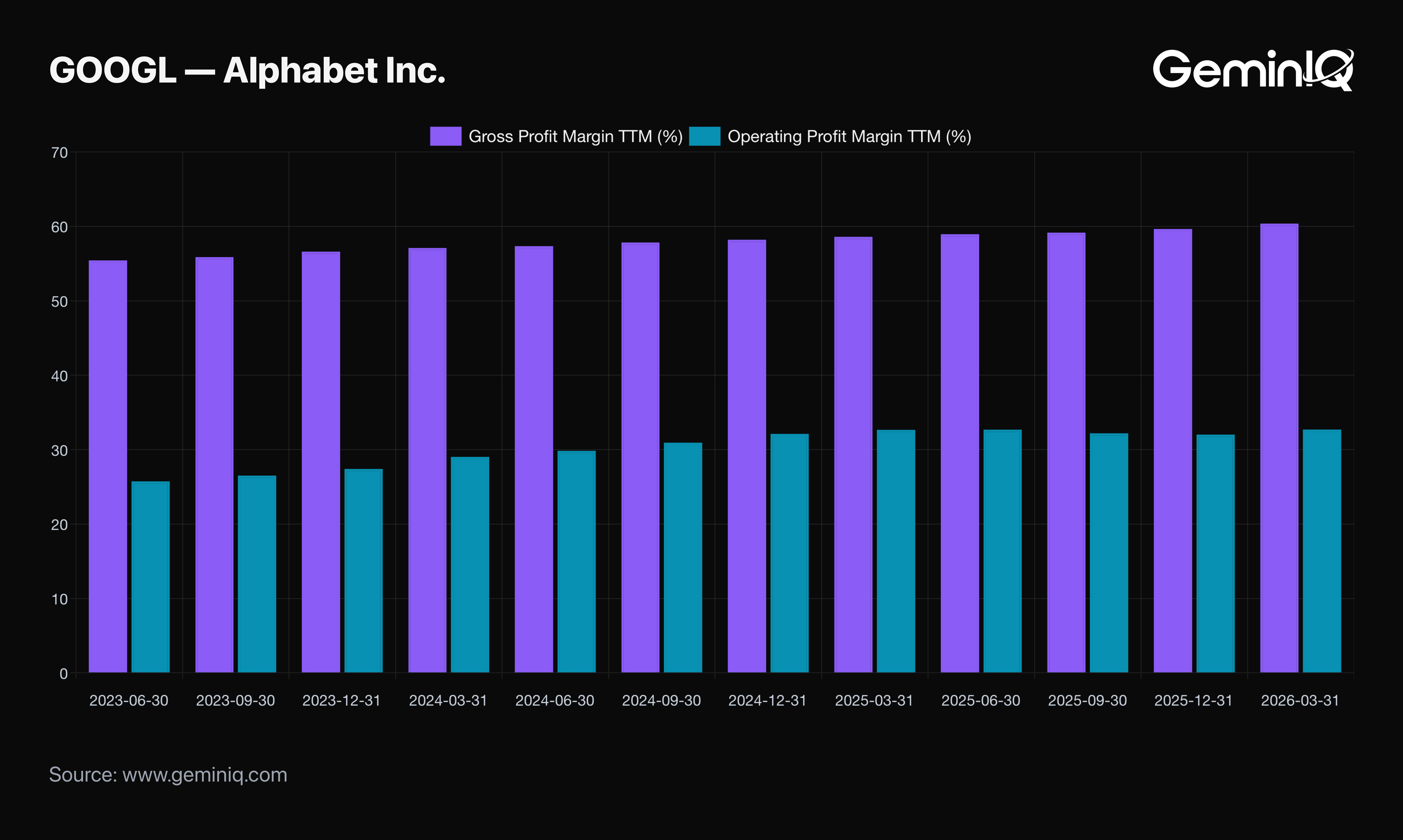
The Data: TTM Revenue is $422.5 Billion, with TTM Net Income of $160.2 Billion. TTM Gross Margin is 60.4%, and TTM Operating Margin is 32.7%, both stable to slightly improving over the past two years even as the capex program scaled up.
The GeminIQ Edge: Pulling Calculated Metrics margin trends alongside the debt and capex trends above shows the core advertising and cloud business hasn't weakened to fund this buildout — margins have held. The new debt is financing growth investment, not offsetting a deteriorating core business.
Smart Money and the Insider Record
Two different signals around Alphabet worth checking on their own terms.
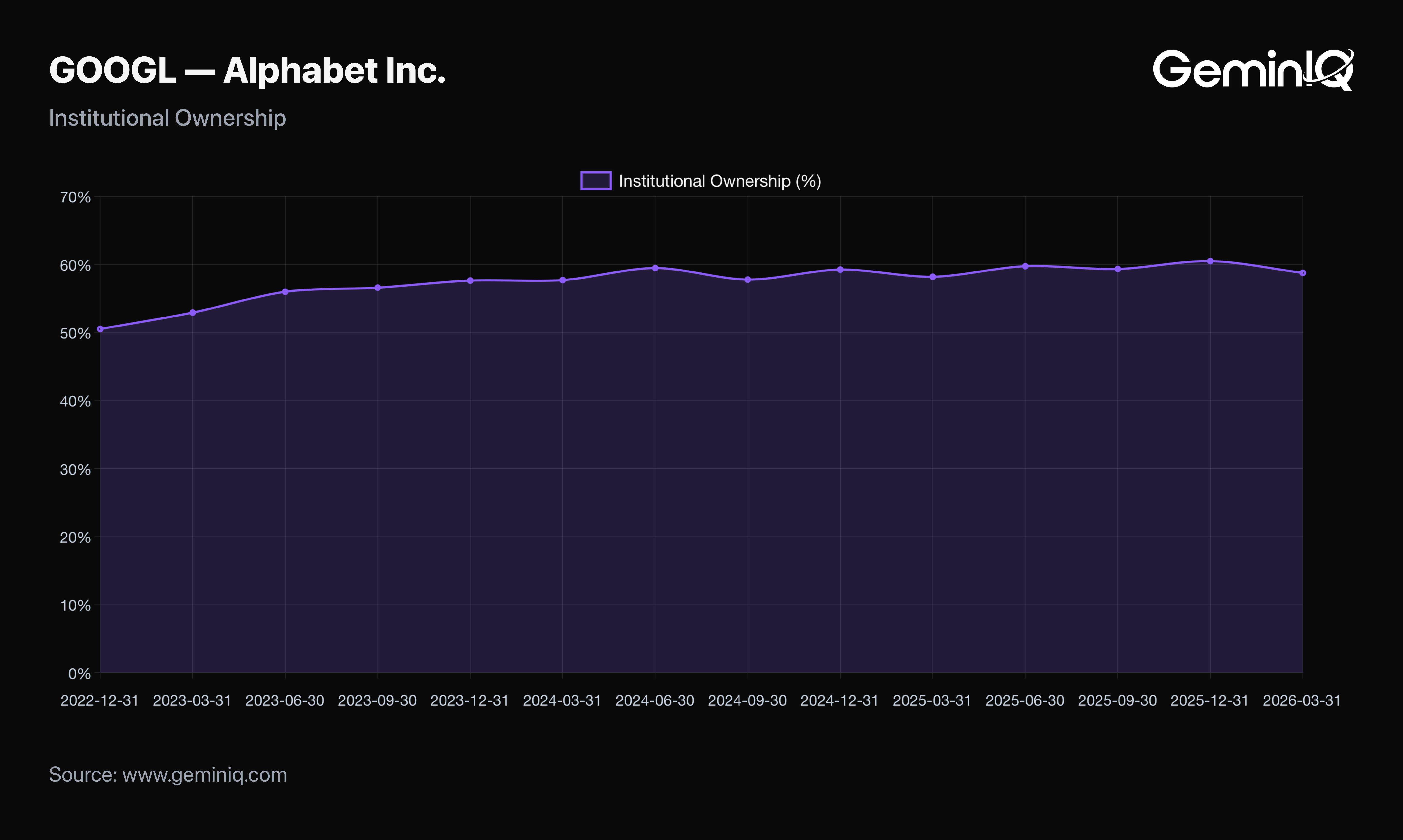
The Data: Institutional Ownership has held in a fairly narrow band, at 60.5% in December 2025 and 58.8% as of the most recent 13F (March 2026, filed with the standard lag) — a modest decline, not a dramatic shift. Insider Transactions show an overwhelmingly sale-weighted record: 838 sales against 3 purchases in the available history.
The GeminIQ Edge: Neither figure is dramatic in isolation, and that's the honest read. A stable institutional base and a heavily sale-weighted insider pattern are standard for a mature mega-cap with substantial employee equity compensation, not a signal worth over-reading in either direction.
Frequently Asked Questions
How much has Alphabet's debt grown?
Alphabet's Long-Term Debt has grown from approximately $10.9 Billion in Q1 FY2025 to $77.5 Billion as of the Q1 FY2026 10-Q, a roughly sevenfold increase, driven by bond offerings completed to fund AI infrastructure capital expenditure.
What is Alphabet's 2026 capital expenditure guidance?
Alphabet has guided to $175-185 Billion in capital expenditure for full-year 2026, more than double the prior year's spending, funding data center and AI infrastructure buildout.
Is Alphabet's core business still profitable?
Yes. TTM Net Income is $160.2 Billion on TTM Revenue of $422.5 Billion, with TTM Gross Margin of 60.4% and TTM Operating Margin of 32.7%, both stable over the trailing two years.
When did Alphabet last file its 10-Q, and what period does it cover?
Alphabet's most recent filing is a Form 10-Q filed April 30, 2026, covering the fiscal quarter ended March 31, 2026 (Q1 FY2026).
Wall Street's data. Main Street's price.
Institutional terminals charge thousands a year for as-filed accuracy. GeminIQ gives you the same thing for a fraction of the cost: financials built directly from raw SEC EDGAR filings, not third-party APIs, with full XBRL traceability back to the original 10-K or 10-Q. No normalized guesswork, just calculated metrics, charts, screeners, and watchlists built on numbers exactly as the company reported them. Start researching now at GeminIQ.com.
All financial figures cited in this article reference Alphabet Inc.'s Q1 FY2026 10-Q (filed April 30, 2026, period ending March 31, 2026). All SEC filings are publicly available at SEC EDGAR.
Disclaimer: The content in this blog is for educational and entertainment purposes only and does not constitute financial, legal, or tax advice. Investing involves risk, including the loss of principal. The views expressed are my own and not intended as financial advice or a guarantee of future performance.