
NVIDIA Q1 FY2027 10-Q: 99% ROIC, Slowing Inventory Turns

By Chad Hartman
Published · Last updated
NVIDIA ($NVDA) just filed its Q1 FY2027 10-Q (filed May 20, 2026). Most coverage of this stock stays fixated on the quarterly revenue print. The more interesting story is what's happening beneath it: trailing twelve-month Return on Invested Capital sits at 99.1%, down from 112.3% a year ago. But a less-discussed operational metric has moved in the opposite direction — inventory turnover has slowed meaningfully over the same period, and that nuance is worth understanding alongside the headline number.
| Field | Value |
|---|---|
| Ticker | $NVDA |
| Filing | Q1 FY2027 10-Q |
| Filed | May 20, 2026 |
| Period End | April 26, 2026 |
| ROIC (TTM) | 99.1% |
| Inventory Turnover (TTM) | 3.53x |
The ROIC Story: 112.3% to 99.1%
A ROIC near 100% sounds almost implausible. What the trend shows is a business easing off an even more implausible peak.
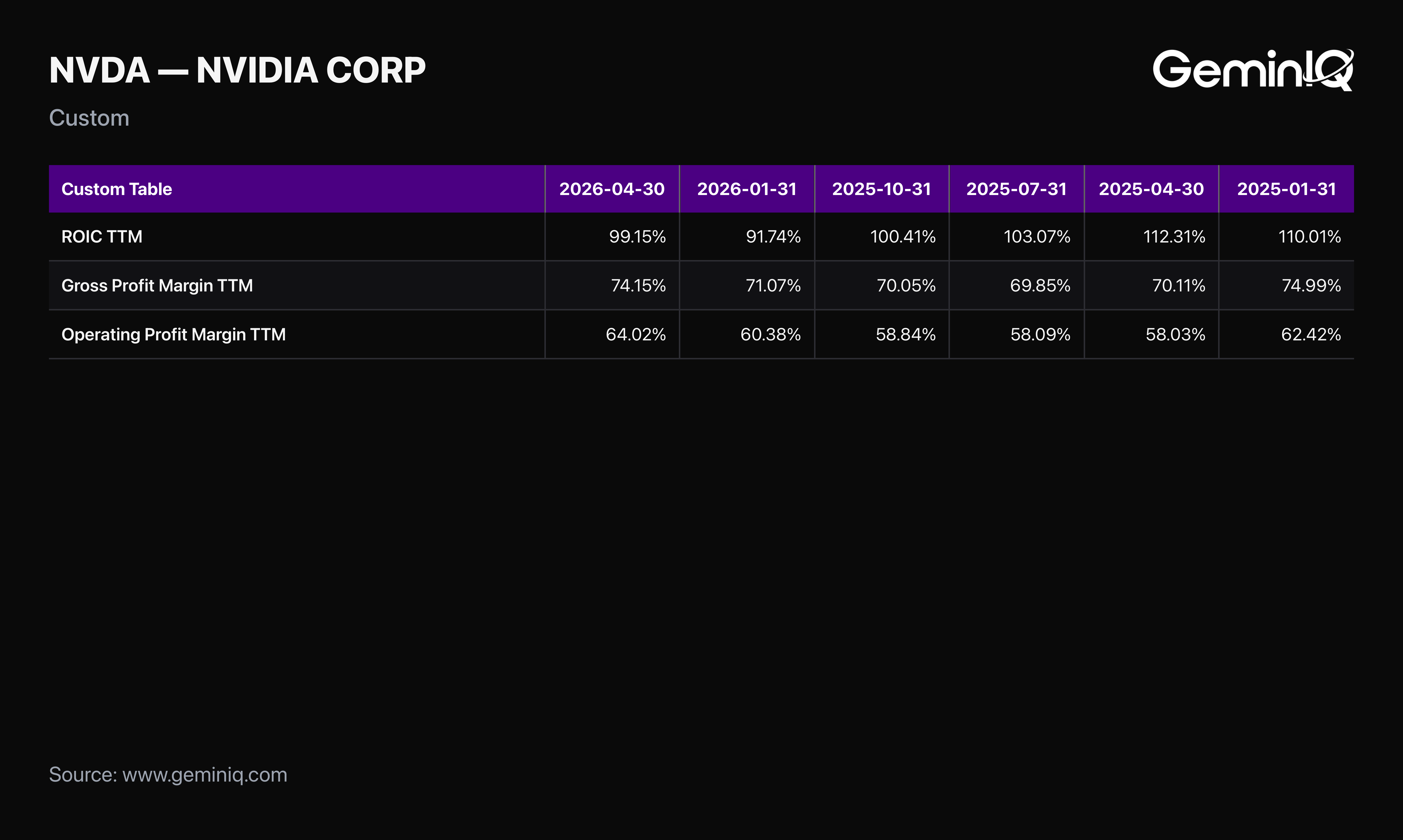
The Data: NVIDIA's TTM Net Operating Profit After Tax is $136.73 Billion, against Average Invested Capital of $137.91 Billion — a ROIC of 99.1%, down from 112.31% a year ago. The path is not a straight line: 112.31% in Q1 FY2026, then 103.07%, 100.41%, a 91.74% trough in the January 2026 quarter, and back up to 99.15% on this filing. TTM Net Income sits at $159.61 Billion, on TTM Revenue of $253.49 Billion, with a TTM Operating Margin of 64.0% and a TTM Gross Margin of 74.1%.
The GeminIQ Edge: Pulling Calculated Metrics alongside the raw Income Statement shows this isn't a one-quarter spike. ROIC has compressed across the past year as the invested capital base grew faster than after-tax profit, then turned back up in the most recent quarter. A business converting nearly a dollar of after-tax operating profit for every dollar of capital deployed is an exceptionally rare structural position, not a screener artifact.
The Buyback Engine Continues
Unlike many large technology companies where stock-based compensation quietly offsets buybacks, NVIDIA's share count keeps shrinking.
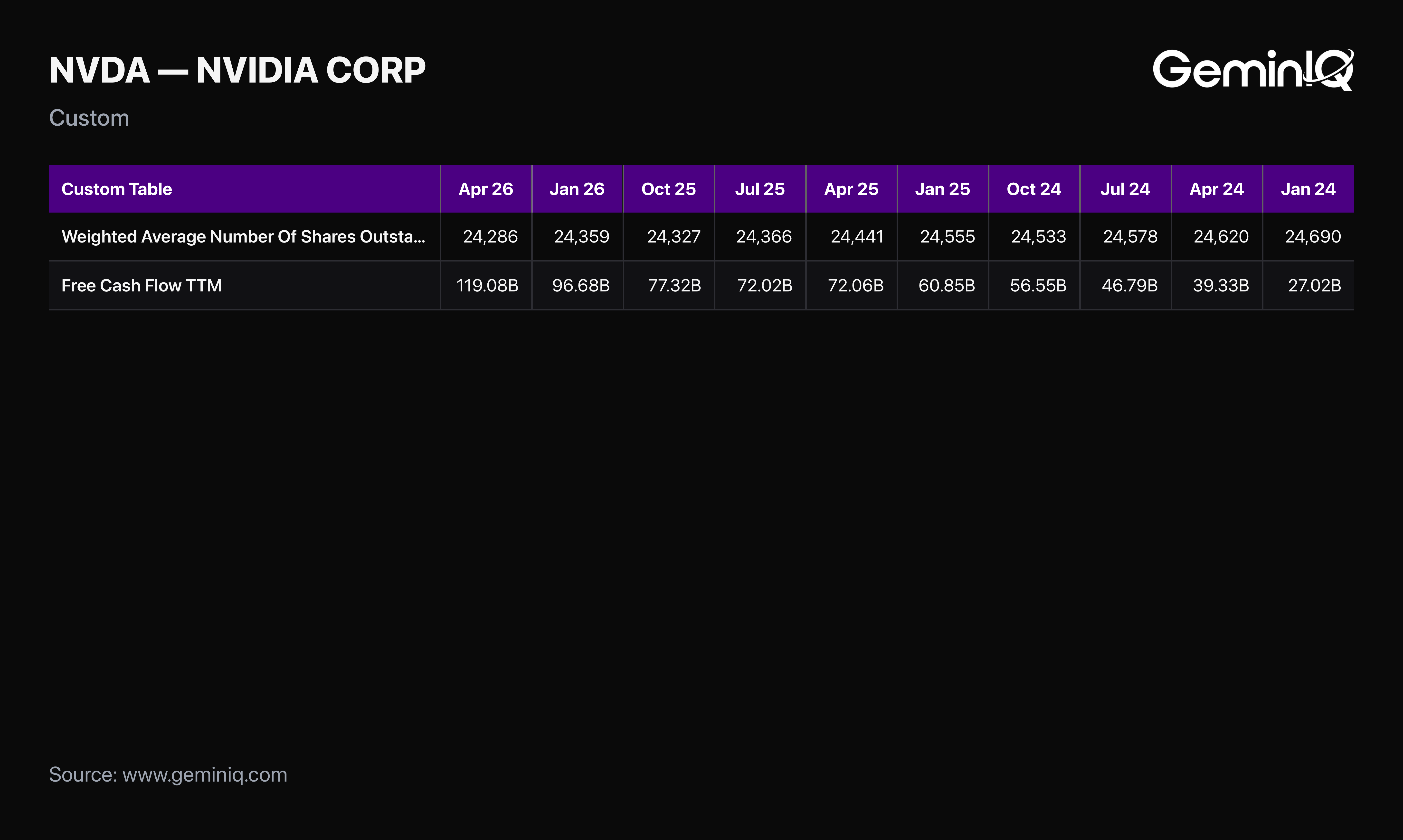
The Data: Basic shares outstanding have fallen from 24.578 Billion in mid-2024 to 24.286 Billion as of this filing — a steady, continued decline rather than a one-time reduction. TTM Free Cash Flow stands at $119.08 Billion, providing ample capacity to continue funding repurchases alongside R&D and capacity investment.
The GeminIQ Edge: Tracking Financial Statements share count data across multiple periods, rather than a single snapshot, confirms the reduction is sustained rather than a single buyback announcement inflating one quarter's optics.
Inventory Turnover Is Actually Slowing
This doesn't fit the purely bullish version of this story, and burying it wouldn't be honest.
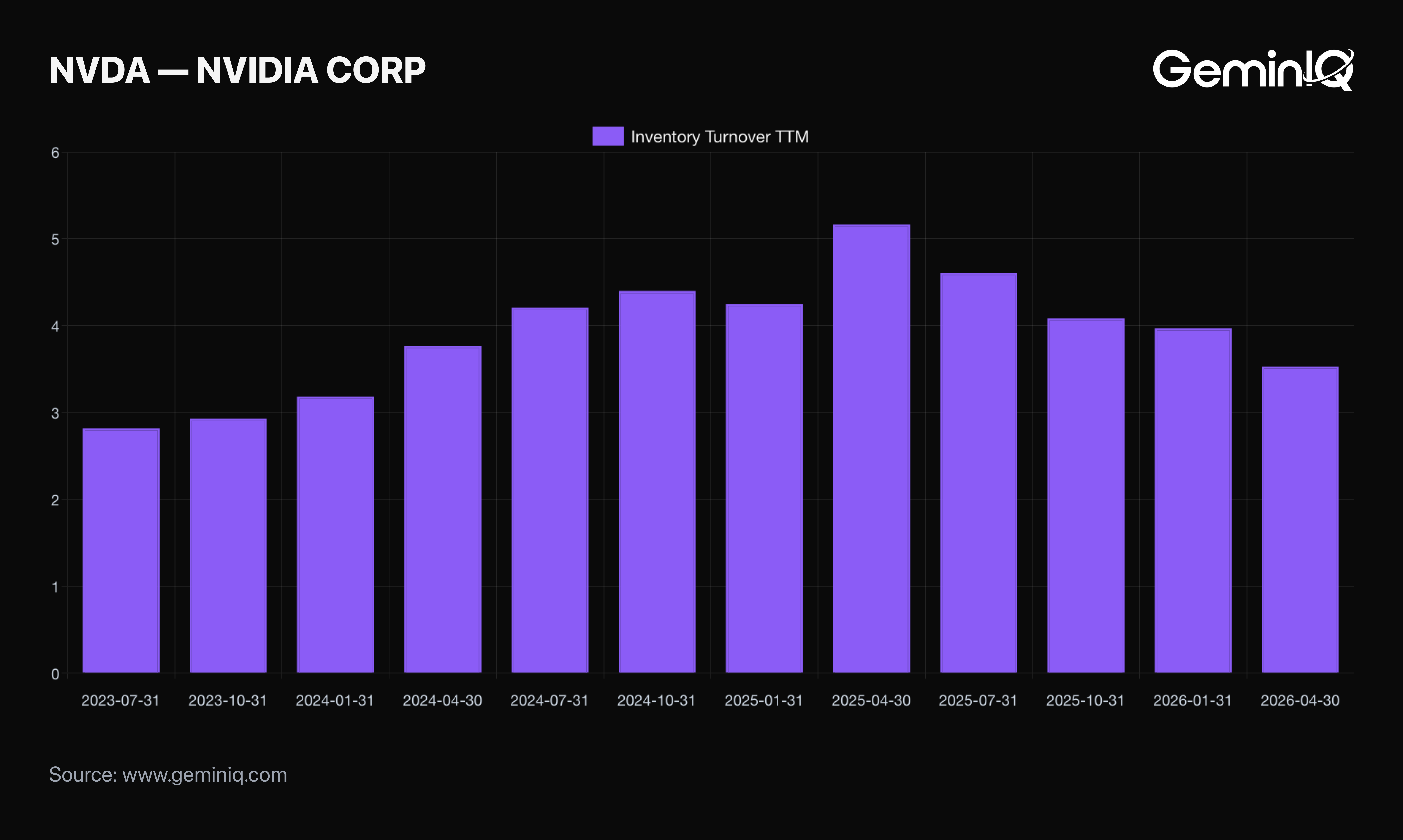
The Data: NVIDIA's TTM Inventory Turnover has fallen from 5.16x a year ago to 3.53x as of this filing — a meaningful, multi-quarter decline, not a single noisy print. This is a lower figure than the "elite, moving product four times a year" framing that circulated based on an earlier filing period.
The GeminIQ Edge: Pulling Calculated Metrics across a full multi-quarter trend, rather than a single period in isolation, is the only way to catch a directional shift like this. A declining turnover ratio can reflect deliberate inventory build ahead of anticipated demand just as easily as slowing sell-through, and the filing data alone doesn't resolve which explanation is correct — but the trend itself is real and worth tracking going forward, not something to ignore because the ROIC headline is more flattering.
Smart Money and the Insider Record
Two different signals around NVIDIA worth checking on their own terms.
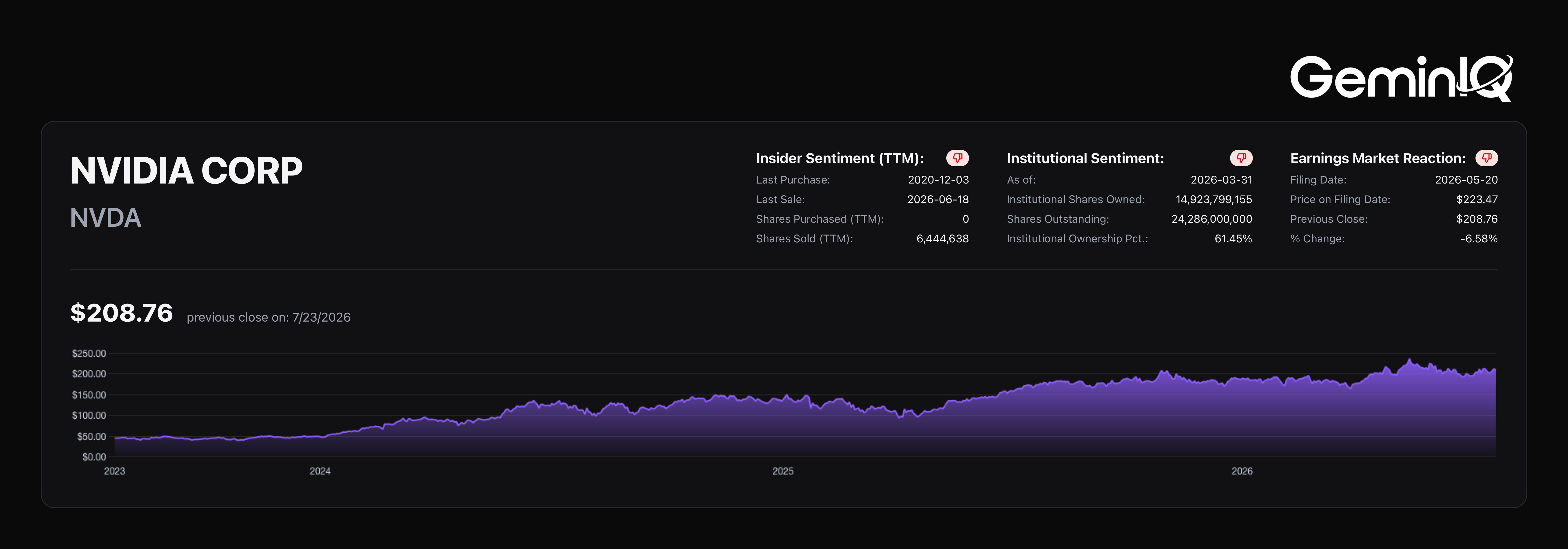
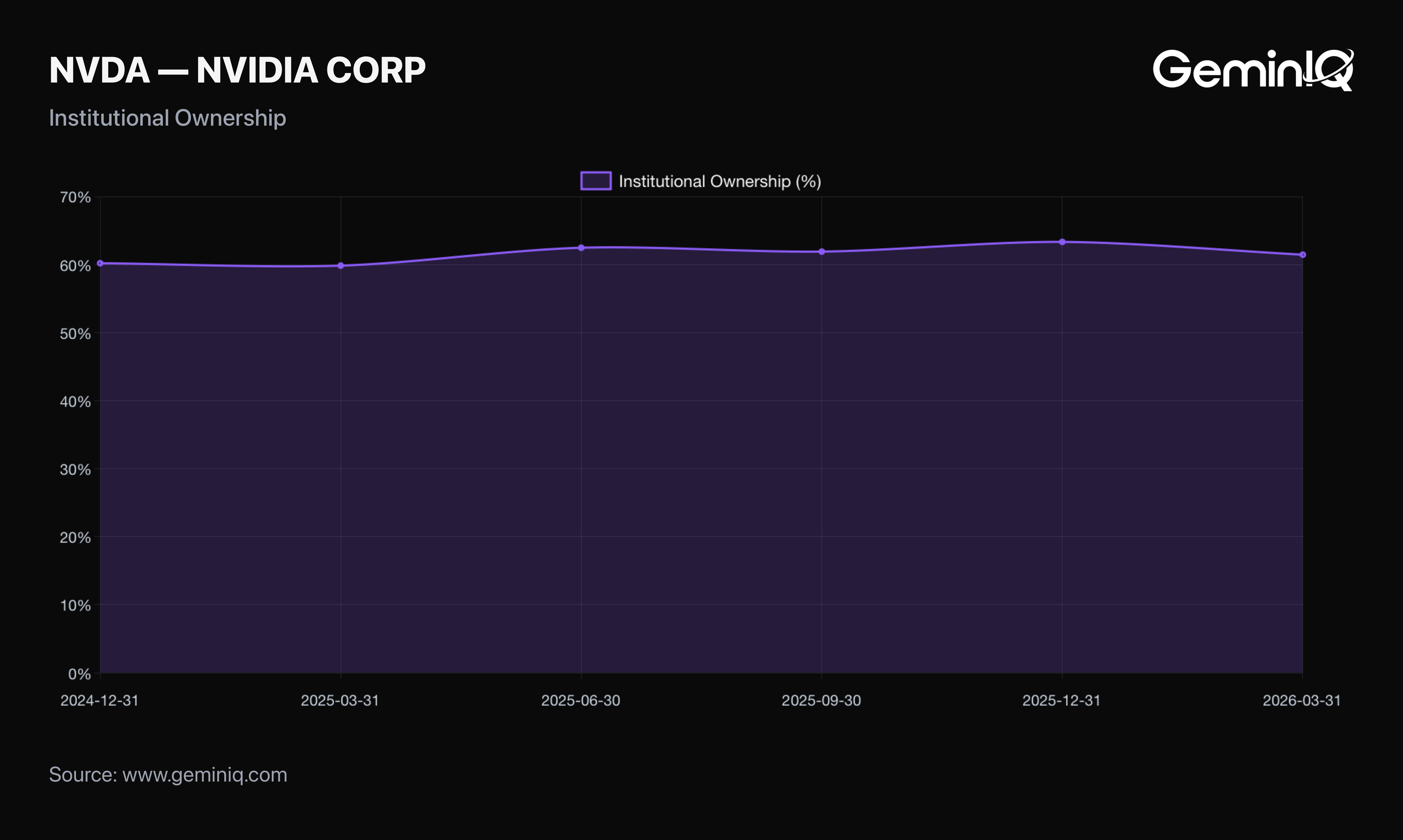
The Data: Institutional Ownership has moved in a fairly narrow band, ranging from 59.8% to 63.3% over the trailing year and sitting at 61.5% as of the most recent 13F (March 2026, filed with the standard lag) — stable, not a dramatic shift either direction. Insider Transactions show a heavily sale-weighted record: 723 sales against 23 purchases in the available history.
The GeminIQ Edge: Neither figure is dramatic on its own, and that's the honest read rather than a manufactured one. A stable institutional base and a sale-heavy insider pattern are standard for a company whose stock has appreciated this dramatically over the trailing several years, not a signal worth over-reading in either direction.
Frequently Asked Questions
What is NVIDIA's current ROIC?
NVIDIA's TTM Return on Invested Capital is 99.1%, down from 112.3% a year ago, driven by NOPAT of $136.73 Billion against Average Invested Capital of $137.91 Billion.
Is NVIDIA's inventory turnover improving or declining?
Declining. TTM Inventory Turnover has fallen from 5.16x a year ago to 3.53x as of the Q1 FY2027 10-Q, a meaningful multi-quarter trend rather than a single-period anomaly.
Is NVIDIA still buying back stock?
Yes. Basic shares outstanding have fallen from 24.578 Billion in mid-2024 to 24.286 Billion as of this filing, a sustained decline funded by TTM Free Cash Flow of $119.08 Billion.
When did NVIDIA last file its 10-Q, and what period does it cover?
NVIDIA's most recent filing is a Form 10-Q filed May 20, 2026, covering the fiscal quarter ended April 26, 2026 (Q1 FY2027).
Wall Street's data. Main Street's price.
Institutional terminals charge thousands a year for as-filed accuracy. GeminIQ gives you the same thing for a fraction of the cost: financials built directly from raw SEC EDGAR filings, not third-party APIs, with full XBRL traceability back to the original 10-K or 10-Q. No normalized guesswork, just calculated metrics, charts, screeners, and watchlists built on numbers exactly as the company reported them. Start researching now at GeminIQ.com.
All financial figures cited in this article reference NVIDIA Corporation's Q1 FY2027 10-Q (filed May 20, 2026, period ending April 26, 2026). All SEC filings are publicly available at SEC EDGAR.
Disclaimer: The content in this blog is for educational and entertainment purposes only and does not constitute financial, legal, or tax advice. Investing involves risk, including the loss of principal. The views expressed are my own and not intended as financial advice or a guarantee of future performance.